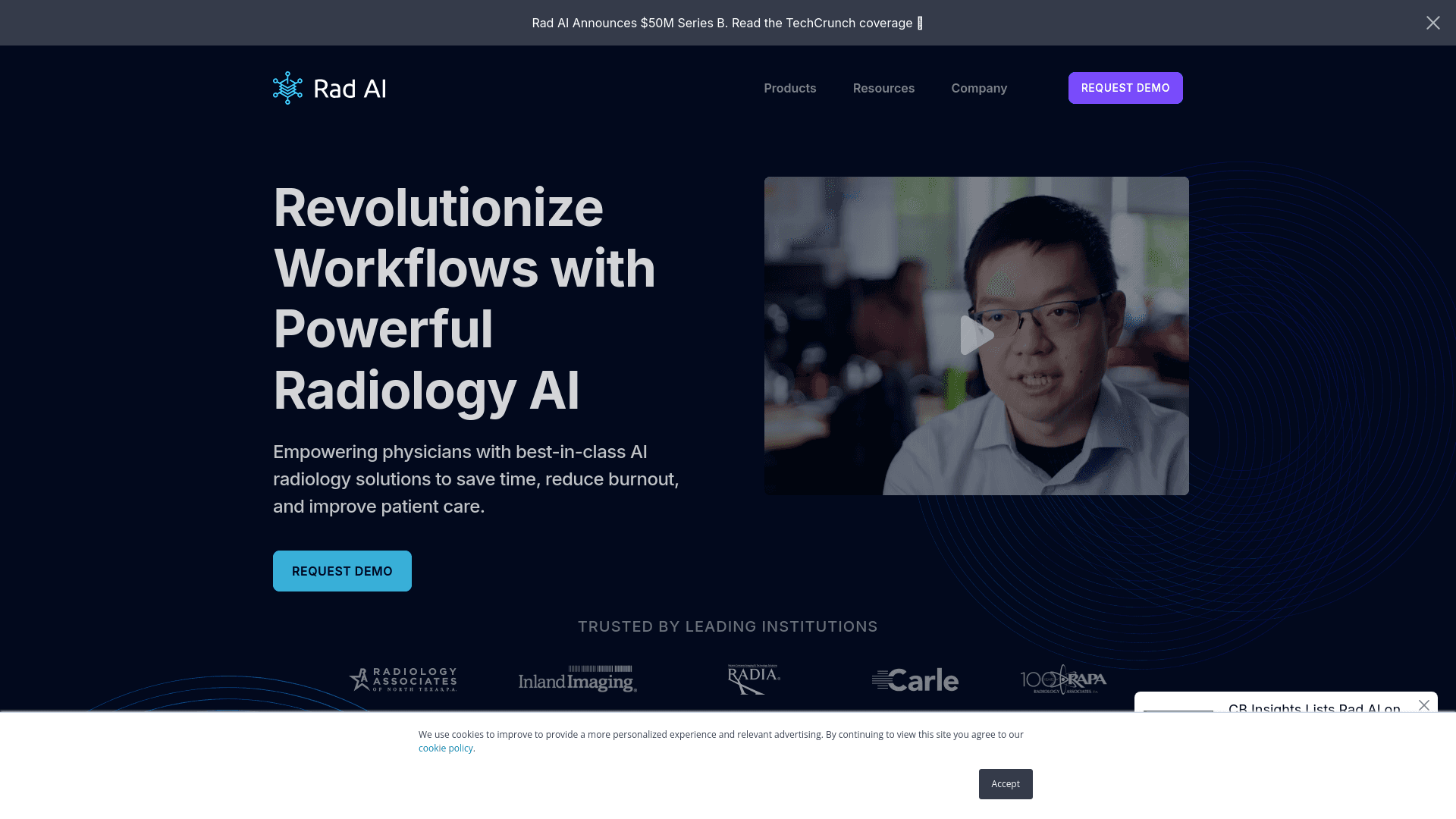
Rad AI
Revolutionizing radiology with AI-driven efficiency and accuracy enhancements.
18,472
Votes
21,643
Views
11,484
Bookmarks
About
Rad AI is a state-of-the-art platform designed to enhance radiology workflows through advanced artificial intelligence. Its suite of products aims to improve efficiency, accuracy, and patient care by automating and optimizing various aspects of radiological practice. Rad AI integrates seamlessly with existing systems, providing significant time savings and reducing the cognitive load on radiologists.
Key Features
- Generative AI Technology: Rad AI uses generative AI to produce high-quality, accurate radiology reports, boosting efficiency and precision.
- Customized Impressions: Rad AI Omni Impressions personalizes radiological impressions to match each radiologist’s unique style, potentially saving over an hour per shift.
- Dynamic Worklist: Rad AI Nexus employs AI to prioritize cases based on urgency and importance, streamlining workflow and reducing interruptions.
- Automated Follow-Ups: Rad AI Continuity automates follow-up tasks for significant incidental findings, improving patient care and reducing liability.
Pros
- Increased Efficiency: Radiologists can save over 60 minutes per shift, allowing more time for patient care and reducing administrative burdens.
- Reduced Burnout: Automation of repetitive tasks and fewer words required for dictation help decrease mental fatigue and burnout.
- Enhanced Accuracy: Improved report accuracy leads to better patient outcomes and greater professional satisfaction.
- Seamless Integration: Easily integrates with existing hospital and imaging systems, ensuring smooth workflow transitions.
Cons
- Learning Curve: New users might face a learning curve in adapting to the AI-driven features and maximizing their benefits.
- Dependence on Technology: Reliance on technology may pose challenges in the event of technical failures or system outages.
- Specialization Limitations: The platform is specifically designed for radiology, limiting its application to other medical specialties.
Who Uses It
- Hospital Radiology Departments: Streamlining case management and reporting processes.
- Private Radiology Practices: Enhancing operational efficiency and communication with patients.
- Academic Medical Centers: Leveraging AI for research and educational purposes.
- Healthcare IT Teams: Integrating advanced AI tools to improve healthcare services.
- Uncommon Use Cases: Employed in medical training programs for simulation; utilized in telemedicine for remote radiological diagnostics.
Pricing
- Request-Based Pricing: Pricing is customized based on the specific needs and scale of the healthcare institution.
You may also like
More tools in Health

Whoop
Optimize fitness, sleep, and recovery with real-time health insights.
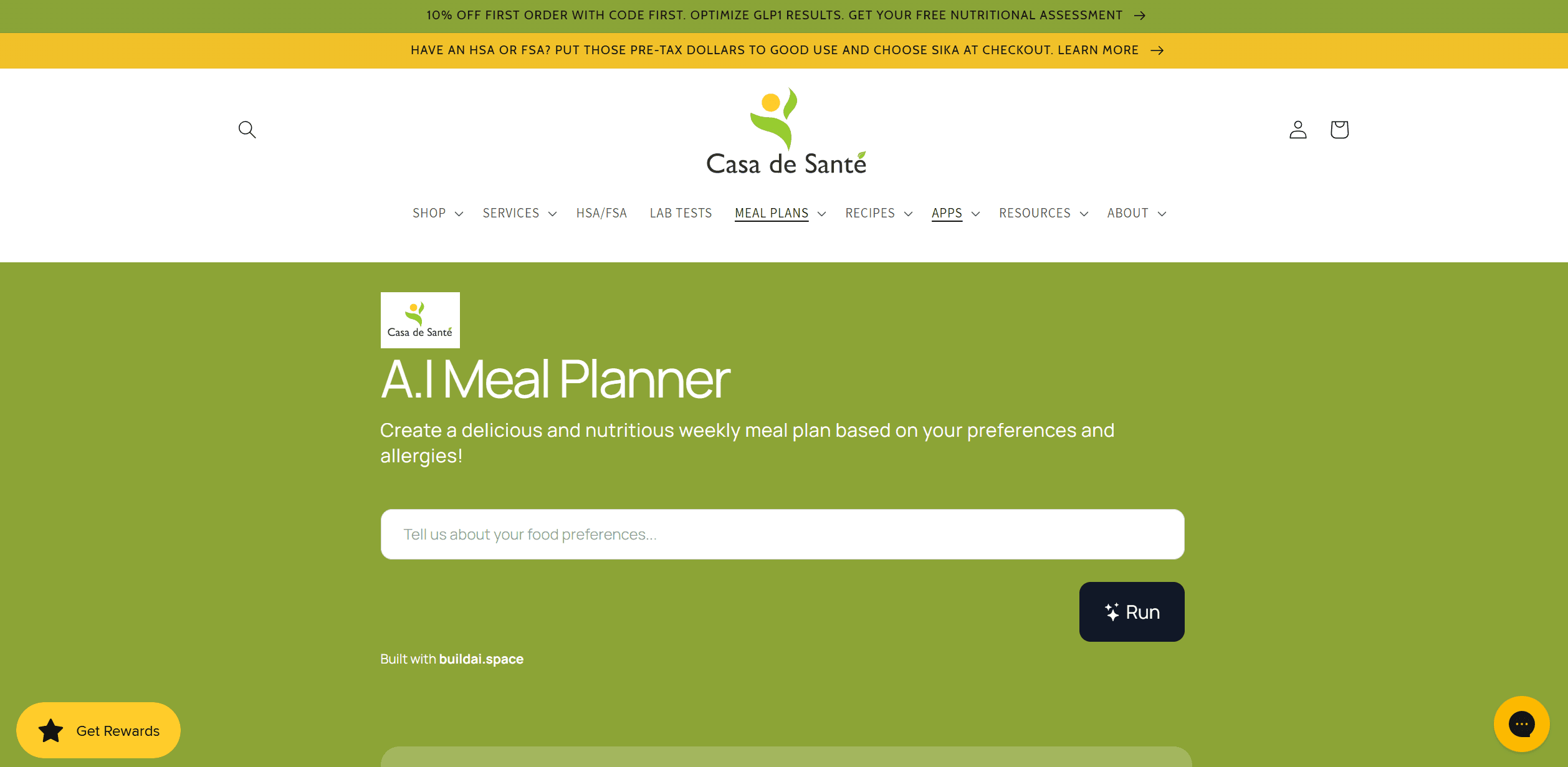
AI Meal Planner
Personalized meal plans tailored to individual dietary needs.

Tortus
Transform healthcare with AI-driven EHR efficiency and support.

MIRI
Revolutionize wellness with AI: personalized health coaching, expert nutrition, fitness guidance, anytime access.

Dream Decoder
Unlock your dreams: AI-powered, personalized, confidential dream interpretation.
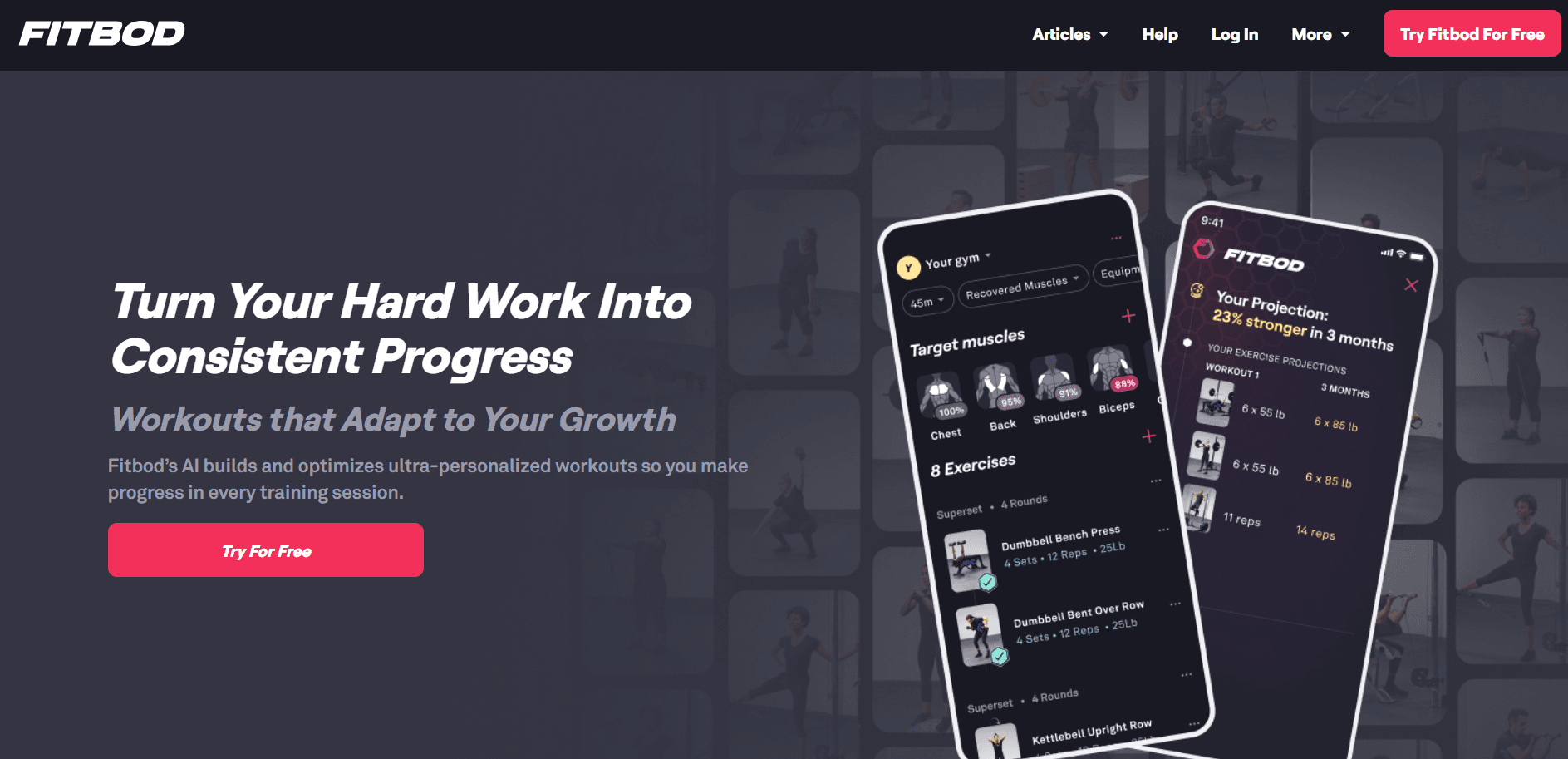
Fitbod
AI-driven app personalizing adaptive workouts for continuous improvement.
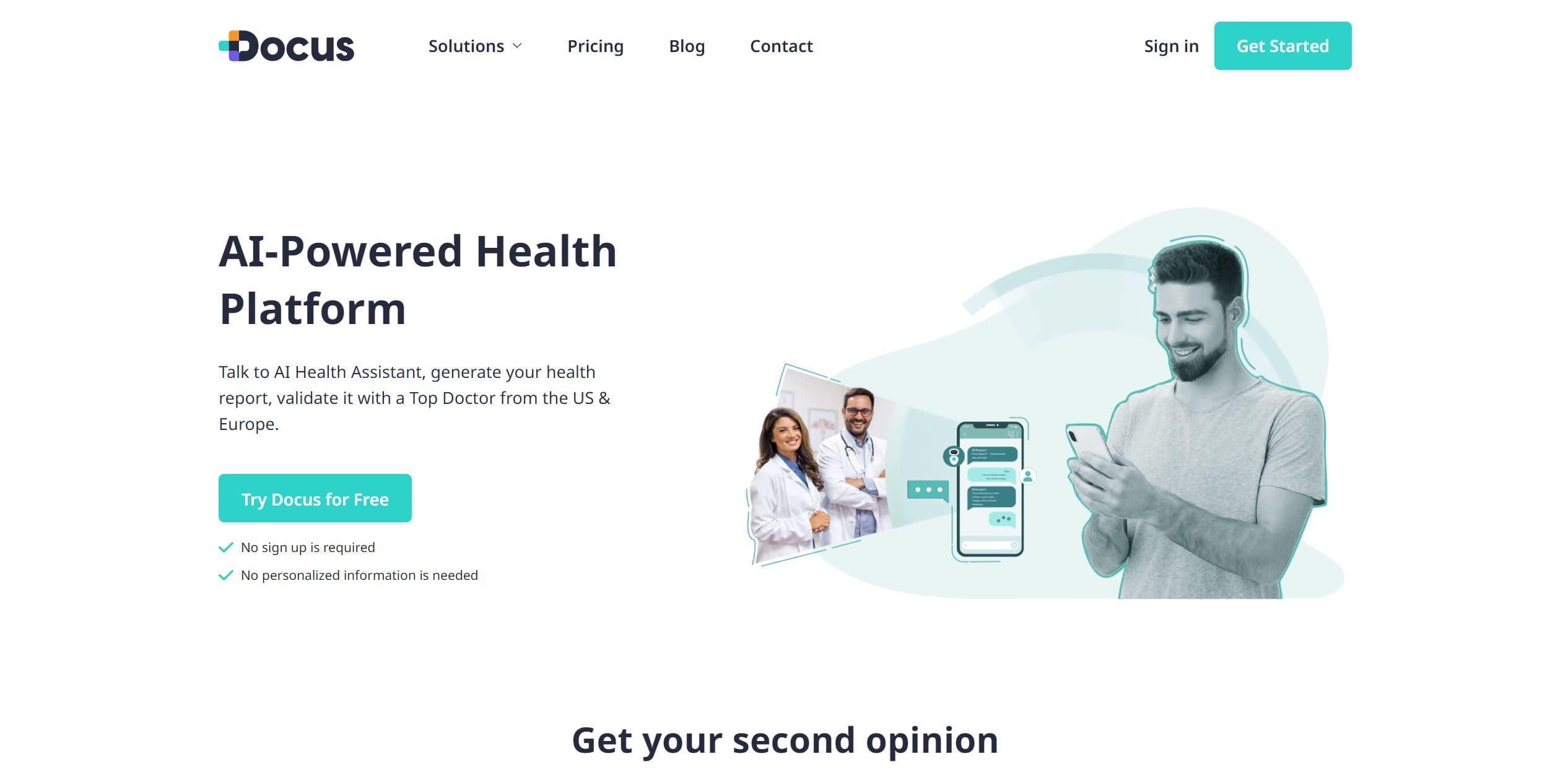
Docus
AI-driven health platform for personalized insights and expert advice.

Heidi
Streamline healthcare admin tasks, and enhance patient focus.

CARPL.ai
Revolutionizing radiology with seamless AI integration and management.

CaseGuard Studio
Redact sensitive information across all media types.
Lore
Enhance personal growth with AI-driven, anonymous, guided conversations.

Endel
Personalized soundscapes for focus, relaxation, and sleep, scientifically crafted.