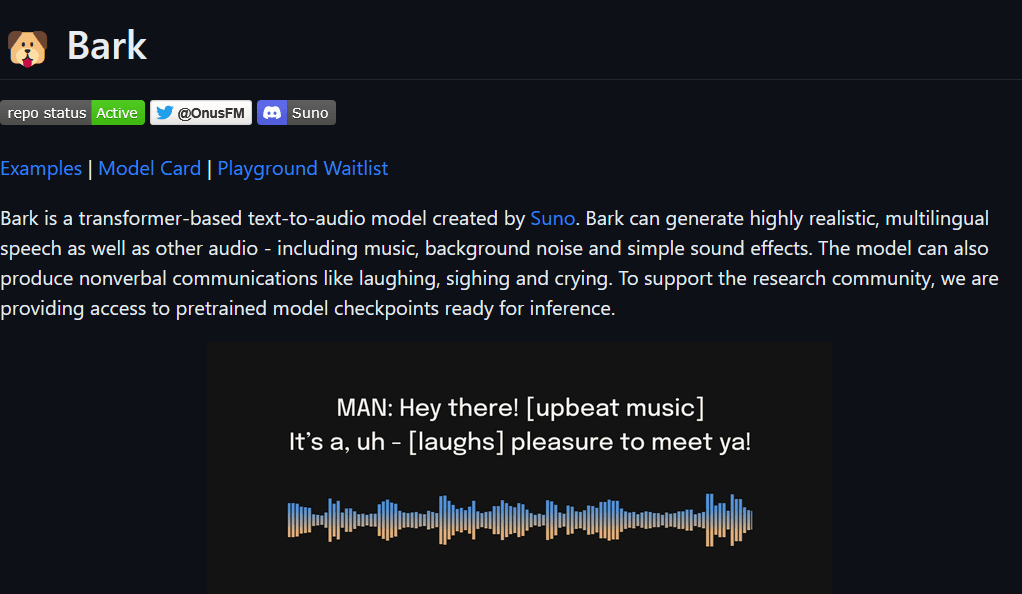
Suno AI Bark
Transform text into diverse, realistic audio with generative AI technology.
14,298
Votes
20,335
Views
11,823
Bookmarks
About
As someone who has a keen interest in the ever-evolving landscape of AI tools, I was thrilled to dive into Suno AI Bark. This innovative tool is a text-prompted generative audio model that pushes the boundaries of traditional text-to-speech (TTS) technology. Unlike conventional TTS models that convert text to speech using intermediate phonemes, Suno AI Bark directly transforms text into a wide array of audio outputs, including realistic multilingual speech, music, background noises, and even non-verbal sounds like laughter and sighs. It's designed for researchers, developers, and creatives who are looking to explore the vast potential of generative audio.
Key Features
- Generative Audio Model: Suno AI Bark employs a transformer-based architecture to generate a broad spectrum of audio from textual input.
- Multilingual Speech Generation: It supports multiple languages and can identify language from the input text, offering high-quality speech synthesis.
- Non-Verbal Sound Production: The model can create non-speech audio like music and sound effects, providing versatility for various applications.
- Open Source and Commercial Use: Suno AI Bark is licensed under the MIT License, making it accessible for both research and commercial projects.
Pros
- Creative Flexibility: The tool's ability to generate a variety of audio types from text prompts opens up creative possibilities that go beyond traditional speech synthesis.
- Ease of Integration: Suno AI Bark can be integrated with existing workflows through the Hugging Face Transformers library, facilitating ease of use for developers.
- Community Support: An active community on Discord and a growing library of voice presets contribute to a collaborative environment for users.
- Continuous Updates: Regular updates, such as speed optimizations and new features, demonstrate an active commitment to improving the tool.
Cons
- Potential for Unexpected Results: As a generative model, Suno AI Bark may produce outputs that deviate from the intended prompts, leading to unpredictability.
- Optimization for English: While the tool supports various languages, the quality of non-English outputs may not be at par with English yet.
- Hardware Requirements: Generating high-quality audio requires substantial VRAM, which might be a barrier for users with limited hardware resources.
Who Uses It
- Content Creators: Harnessing the tool for generating unique and diverse audio content for videos, podcasts, and more.
- Game Developers: Employing the tool to create immersive soundscapes and character voices in video games.
- Language Researchers: Utilizing the model to study and develop multilingual speech synthesis systems.
- Sound Designers: Leveraging the tool for rapid prototyping of sound effects and ambient audio for various media.
- Uncommon Use Cases: Being adopted by educators for interactive learning experiences; used by audiobook producers for generating expressive narration.
Pricing
- Free Access: Suno AI Bark is open-source and available for use at no cost.
- Commercial Use: The MIT license allows for commercial applications without a separate fee.
You may also like
More tools in Audio Generators
Noisee AI
Find powerful Noisee AI alternatives for creators.

Retell AI
Create lifelike AI voice agents, deploy anywhere, analyze real-time.
Vocallab AI
A tool to generate speech and clone voices from text.

DaVinci Resolve
Unify editing, color, VFX, and audio post-production.

PlexiGen AI
A tool to create videos with matching audio from text or images.
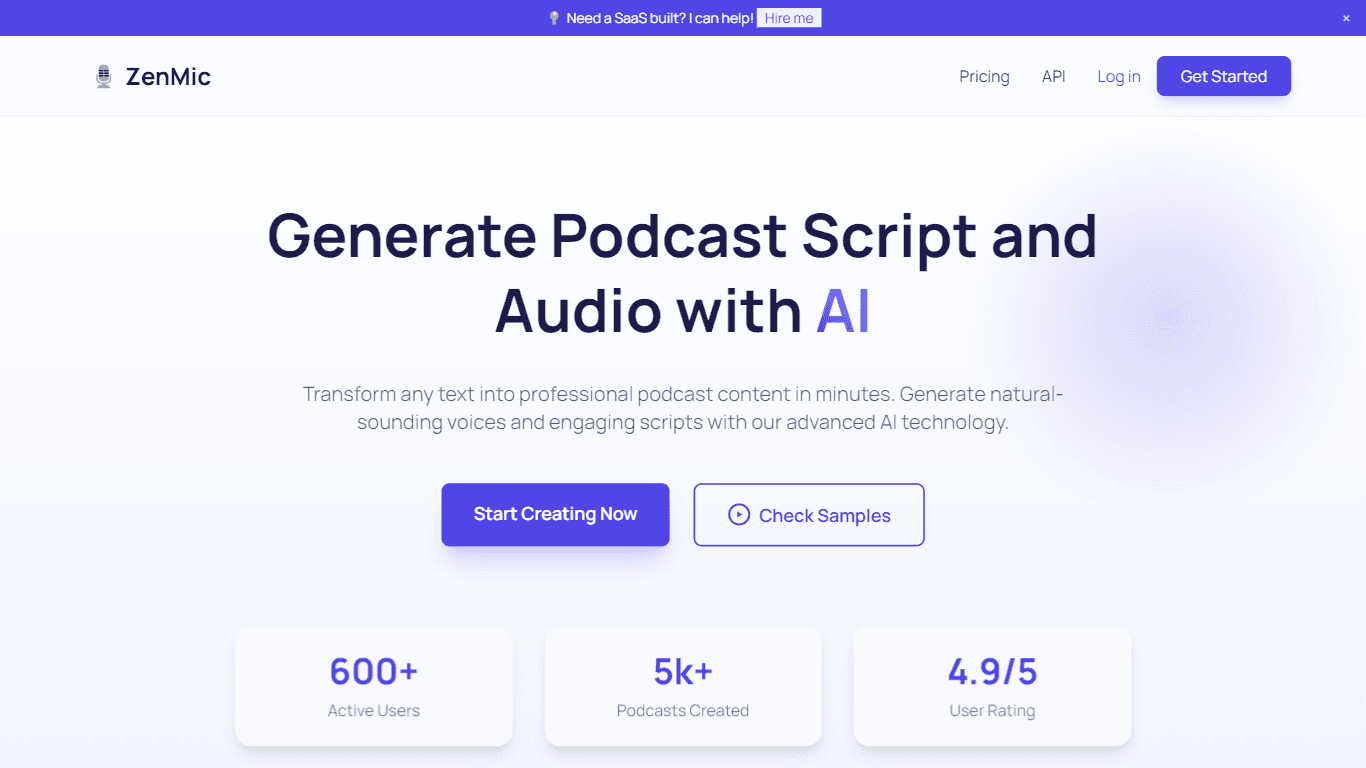
ZenMic
ZenMic is an innovative AI-driven podcast generator designed to transform any text into professional podcast content within minutes. The platform leverages advanced artificial intelligence technology

BanterAI
BanterAI offers a unique platform for influencers and personalities to engage with their audience like never before. By creating a personalized AI voice bot on Banter AI, users can monetize their pers

Smallest.ai
A tool with ultra-low latency text-to-speech and AI voice agents for conversational applications.

Heidi
Streamline healthcare admin tasks, and enhance patient focus.

Instadesk
Instadesk is a robust cloud contact solution focused on transforming customer interactions and enhancing service efficiency for enterprises. With a comprehensive suite of AI-powered tools, including a
Replicate
Unlock AI's potential: run, fine-tune, deploy models easily and cost-effectively.
Camb.ai
Transforms video dubbing with nuanced voice preservation and 100+ languages.