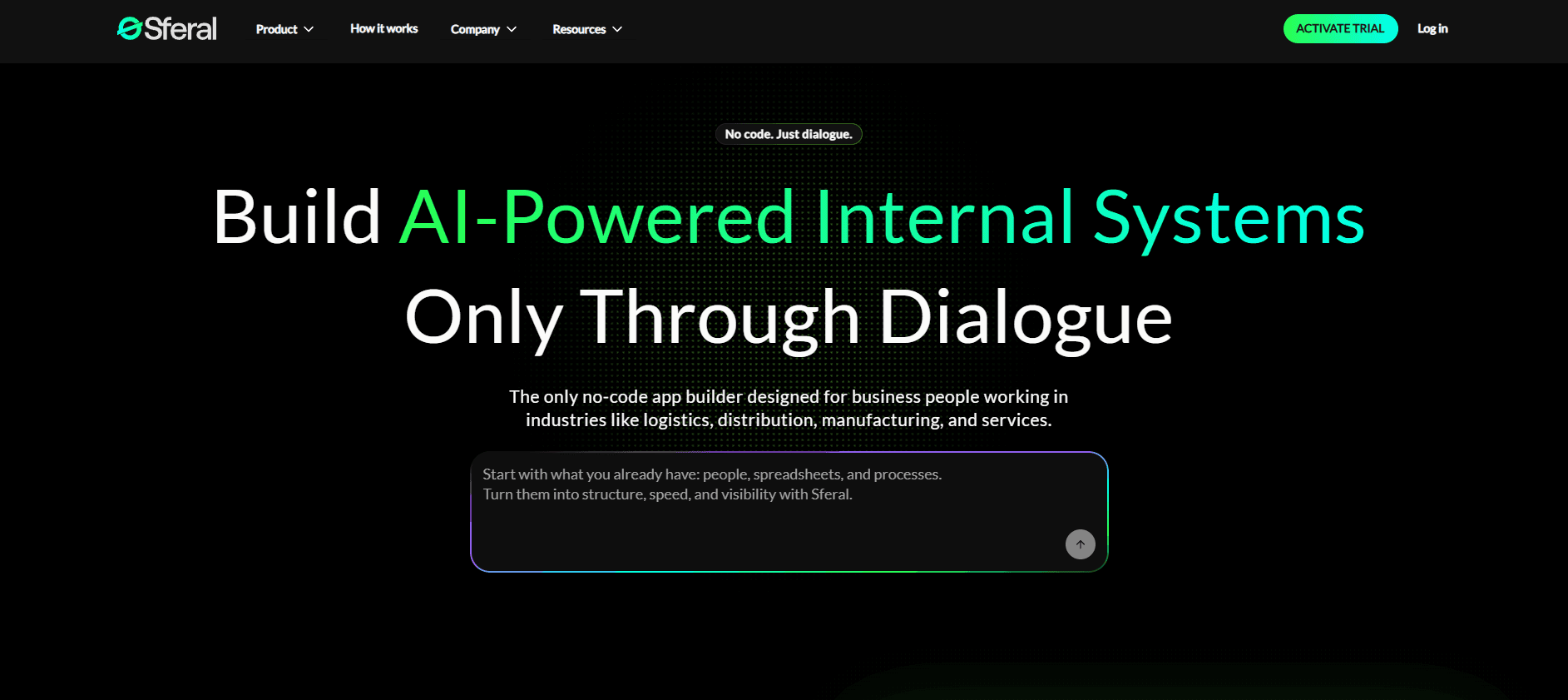
Sferal
Describe workflows, get internal apps and agents.
14,928
Votes
27,257
Views
12,030
Bookmarks
About
Sferal helps operations-heavy companies build AI-powered internal systems and agents through plain-language dialogue instead of code. Aimed at logistics, distribution, manufacturing, and service businesses that still juggle spreadsheets, email, and messaging apps, it turns conversational briefs into working apps, dashboards, and AI agents that sit on secure infrastructure with governance, analytics, and integrations to existing tools.
Key Features
- Conversational no-code builder: Users describe the app or workflow in natural language while the system clarifies requirements, proposes structure, and generates pages, forms, and business logic in real time.
- AI agent studio and marketplace: Teams create agents from documents, spreadsheets, videos, or live systems, or start from marketplace templates, then give each agent a defined role such as quote responder, document processor, or HR screener.
- Multi-LLM orchestration: Sferal routes tasks across multiple large language models, picking the most suitable model for each job, which helps balance quality, speed, and cost.
- Integrated front-end, back-end, and database: Every app includes the UI, backend logic, secure APIs, and structured data storage by default, plus debugging tools and automated security checks.
- Enterprise security and deployment options: Dedicated virtual machines, role-based access control, login and session management, audit logs, and both cloud and on-prem deployment choices suit stricter IT environments.
- Connectors and data ingestion: Integrates with CRMs, ERPs, HR and finance tools, and ingests PDFs, emails, and spreadsheets so agents operate on current business data instead of isolated exports.
- Governance and observability: A central console shows all agents and workflows, their usage, spend, and ROI, giving leadership the control tower they usually miss in DIY automation efforts.
Pros
- Business-user first design: Built explicitly for operations, logistics, and service teams that do not have product managers or dedicated developers.
- Plain-language build process: Non-technical staff can talk through what they want and let the AI propose data models and interfaces, which feels far closer to a working conversation than to a traditional app builder.
- From quick wins to complex workflows: Organizations can start with a single high-impact agent, then expand into cross-department workflows without switching platforms.
- Security and governance built in: Dedicated environments, granular access control, and auditability support companies that care deeply about compliance and risk.
- Proof points and industry focus: Case studies in logistics and manufacturing show clear savings in time, headcount, and SLA penalties, which helps justify investment.
Cons
- Opaque public pricing: There is no detailed pricing grid with usage limits, so most teams need to talk to sales or use the ROI calculator to estimate spend.
- Best fit for mid-sized and larger organizations: Very small teams may find the orchestration, governance, and deployment options more than they practically need.
- Learning curve for process design: Coding is removed, but teams still must articulate workflows, decisions, and data clearly, which can require internal process work.
Who Uses It
- Logistics and Distribution Companies: Automating transport dispatch, routing, schedule updates, and quote replies while keeping teams aligned.
- Manufacturers and Industrial Firms: Building inventory dashboards, production trackers, maintenance coordination, and quality documentation flows.
- Professional Services and Agencies: Running client portals, project tracking, and automated reporting that pull data from multiple systems.
- HR, Talent, and People Ops Teams: Deploying CV screening agents, onboarding flows, performance review tools, and employee self-service portals.
- Finance and Admin Departments: Handling invoice and contract extraction, approval workflows, and profitability dashboards across projects and clients.
- Uncommon Use Cases: Used by board-level teams as live “command centers” for KPIs across several ERPs; Adopted by regional call centers to triage email and call volume with human-in-the-loop agents.
Pricing
- Free Trial: A 7-day trial lets organizations build internal apps and experiment with AI agents before choosing a subscription.
You may also like
More tools in AI Chatbots

UiPath
Streamline workflows with AI-driven automation and seamless integration.

One AI
Boost website engagement and sales with adaptive AI-driven interactions.

Spoke.ai
AI-powered tool revolutionizes team communication and project management.
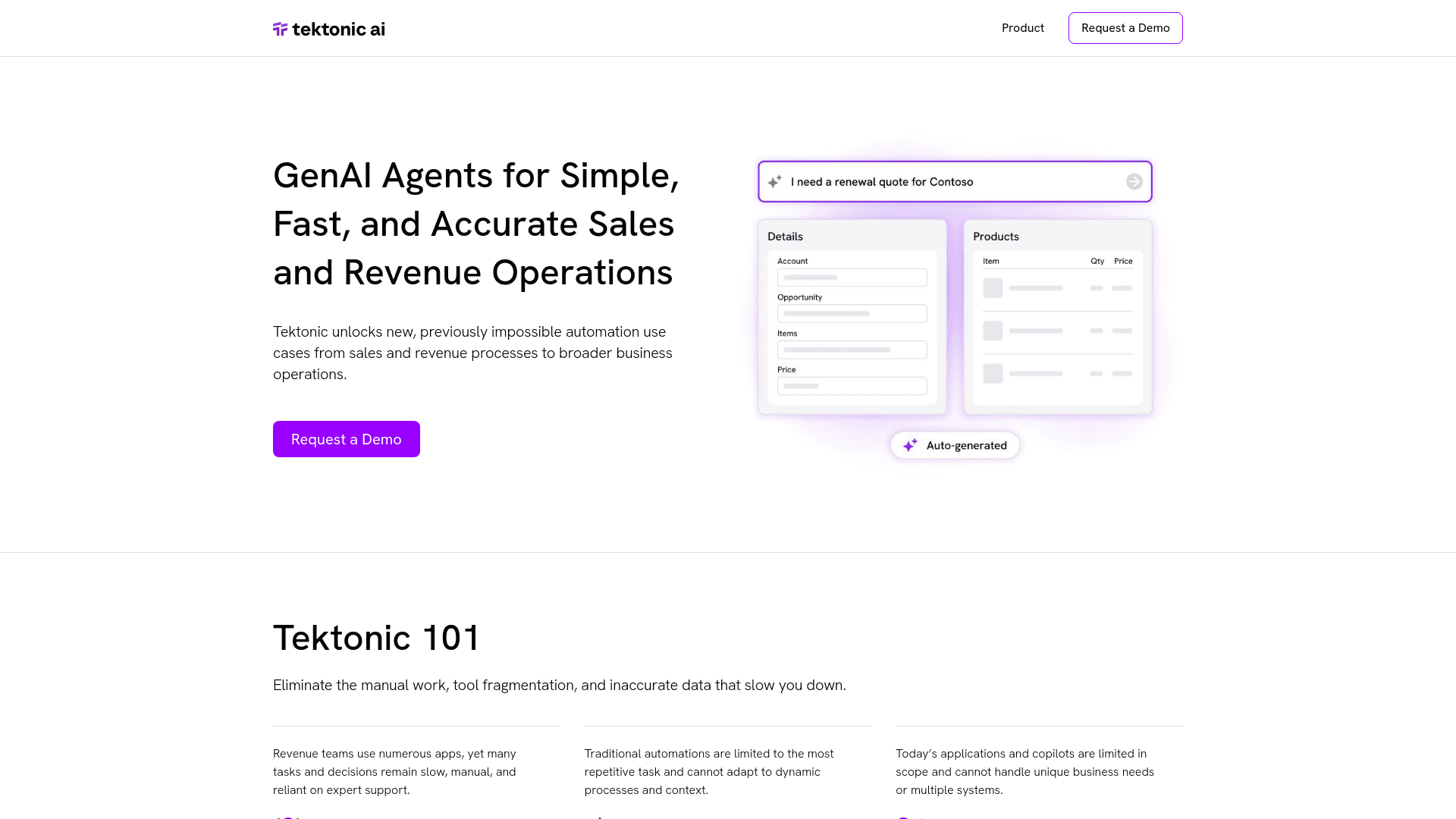
Tektonic AI
Streamline sales and revenue operations with advanced AI-driven automation.

Ada
Revolutionize customer service with AI across all digital platforms.
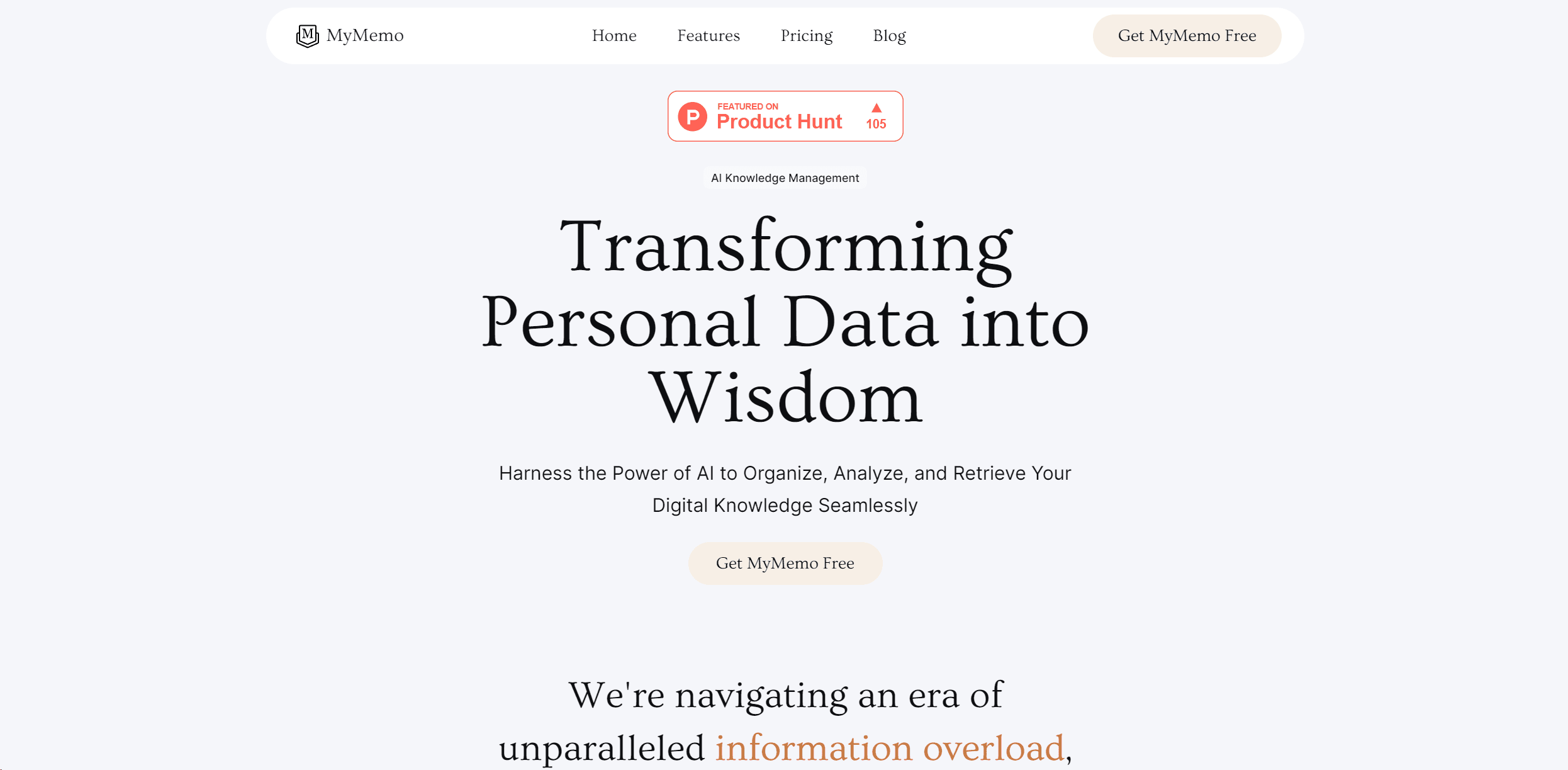
MyMemo AI
Transform digital chaos into an organized, AI-enhanced knowledge oasis.

Retell AI
Create lifelike AI voice agents, deploy anywhere, analyze real-time.

Inworld
Elevate game development with dynamic NPCs, immersive worlds, and AI-driven content creation.
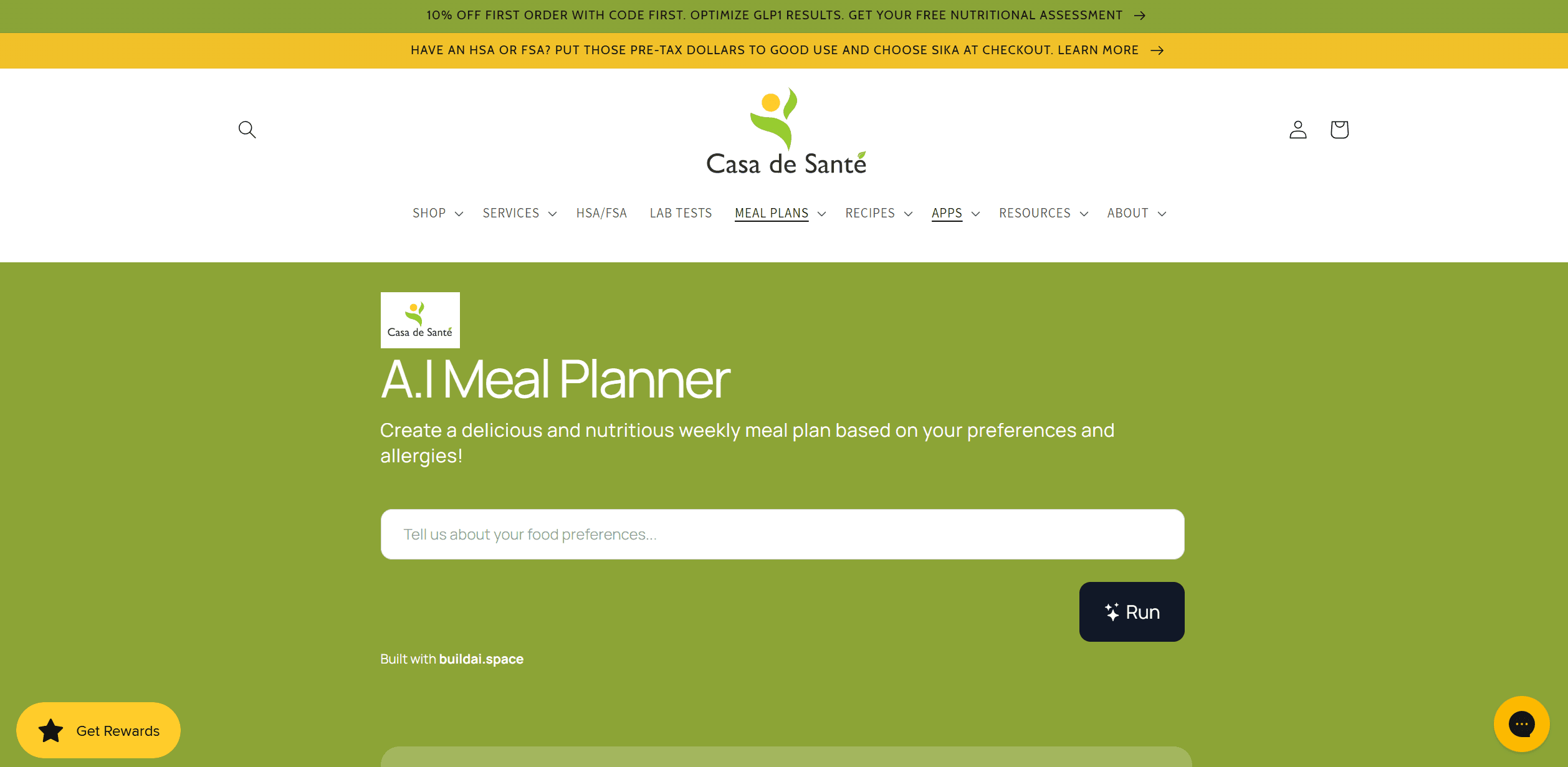
AI Meal Planner
Personalized meal plans tailored to individual dietary needs.

Whoop
Optimize fitness, sleep, and recovery with real-time health insights.

AI Trip Planner
AI-driven tool for personalized, efficient travel itinerary creation.

Hume AI
Transforms AI with emotional intelligence for natural, empathetic interactions.